What Is an Elevator Door Baffle?
An elevator door baffle is a clear acrylic safety panel installed on the inside of a residential elevator swing door to reduce the gap between the door and the elevator gate.
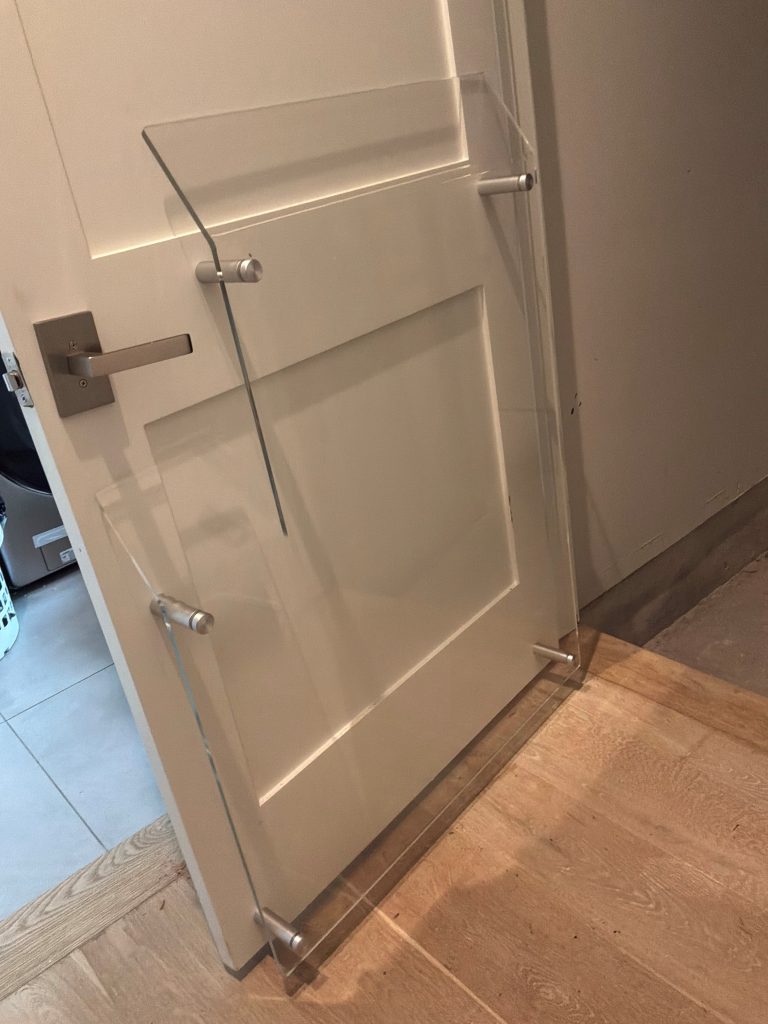
An elevator door baffle, also called an elevator space guard, is a safety panel installed on residential elevator doors to reduce the gap between the swing door and the elevator gate.
These panels are designed to help prevent entrapment hazards, particularly for children, by limiting access to the space between the landing door and the moving elevator car gate.
Elevator door baffles are commonly used in homes with swing-door elevators and are often associated with safety guidelines that recommend reducing door gaps to 3–4 inches or less.
The Problem They Are Designed to Solve
In many residential elevators, there is a gap between the outer swing door and the interior gate.
While this design is common, it can create a potential hazard:
- Children or small objects can enter the gap
- The elevator can move while something is inside the space
- This creates a risk of entrapment or injury
Because of this, many homeowners, contractors, and elevator service companies look for ways to reduce or eliminate that gap. This is why many homeowners begin searching for a solution like an elevator door baffle to reduce that gap.
Traditional Solutions
Historically, elevator door baffles and space guards have often been:
- Made from opaque plastic or polycarbonate
- Bulky or industrial in appearance
- Designed primarily for function, not aesthetics
While effective, these solutions can stand out visually in a finished home, block light or sightlines, and look like an afterthought rather than an integrated solution.
A Modern Acrylic Alternative
A newer approach uses clear acrylic panels to achieve the same safety goal while maintaining a clean, modern appearance.
- Maintain visibility and light flow
- Blend into residential interiors
- Provide a minimal, unobtrusive look
- Still reduce the gap between the door and gate
Instead of looking like a retrofit safety device, acrylic baffles are designed to feel like part of the home.
Acrylic vs. Polycarbonate
Both acrylic and polycarbonate are used for safety panels, but they behave very differently in residential applications.
Acrylic
- Crystal-clear appearance
- Better optical clarity
- More refined, glass-like look
- More scratch-resistant surface than polycarbonate in everyday residential use
- Better suited for finished home interiors where appearance matters
For residential elevator applications, acrylic provides a cleaner, more visually integrated solution.
Polycarbonate
- Often has a slightly hazier appearance
- Scratches more easily
- Frequently used in industrial or heavy-duty environments
- Typically selected where impact resistance is prioritized over appearance
Polycarbonate is common in traditional guards, but it usually does not provide the same clean, finished appearance as acrylic.
Standard vs. Custom Elevator Guards
Elevator door baffles can be fabricated as either standard sizes or custom-made panels.
Standard Sizes
- Designed for common door openings
- Faster ordering and installation
- More cost-effective
- Ideal when a common residential configuration is appropriate
Custom Fabricated Guards
- Required for unique dimensions or conditions
- May need special cutouts, offsets, or mounting requirements
- Better suited for non-standard openings or site-specific conditions
Our standard acrylic baffles are available in 29″ and 33″ widths for common residential swing-door installations. Use our elevator door baffle measurement guide to confirm whether a standard size is appropriate before ordering.
When Homeowners Add Elevator Door Baffles
Homeowners typically install elevator door baffles when they are:
- Updating an older residential elevator
- Addressing safety concerns
- Preparing for inspection or compliance review
- Adding protection for children in the home
- Looking for a cleaner alternative to bulky traditional guards
Frequently Asked Questions
Is an elevator door baffle required?
Elevator door baffles are not always required in every installation. However, many residential elevator projects reference safety guidelines that recommend reducing the gap between the swing door and the elevator gate. Final requirements depend on the installer and the authority having jurisdiction (AHJ).
What is the purpose of an elevator door baffle?
The purpose of an elevator door baffle is to reduce the gap between the swing door and the elevator gate to help limit access to that space and reduce entrapment hazards. In residential settings, clear acrylic baffles can also provide a cleaner, more visually integrated appearance than many traditional guard materials.
How do I determine left-hand vs right-hand?
Handing is determined from inside the elevator cab, facing the landing door.
Identify the location of the door handle:
- If the handle is on the left side → select LEFT HAND
- If the handle is on the right side → select RIGHT HAND
The panel includes a handle cut-out and must match the handle location. Handing is not determined from the hallway side.
Looking for a Cleaner Alternative?
If your elevator has a gap between the swing door and the interior gate, a clear acrylic baffle may provide a clean, effective solution.